Wednesday, 7 January 2015

Five reasons You Should Tear Up Your 2015 New Year Resolutions

download
The lists you’ve made, tear them. The resolutions you just swore, dump them. You know you are not going to keep them; in only a matter of days, perhaps even hours, they will be as broken as the ones you made at the beginning of 2014.
It’s not totally your fault that you couldn’t keep your resolutions of last year, or that the ones you are about to make for 2015 are doomed to fail. Majority of those in the new-year-resolution business are in the bad market cycle. They get their hopes up with new oaths for the new year and a tad later they are chewing off their fingers in frustration for breaking their self-promises.  The reason for this constant failure in keeping new year vows is not solely caused by the lack of will or tenacity to stand by our words, but in those words themselves and how we declare them. Here are five things killing your new year resolution.
 
First, January 1 is a wrong day to start a resolution
The first day of the new year seems like the perfect time to start afresh, but it is not. In fact it is the worst day to avow a fresh start according to personal finance writer Andrea Karim. In her article ‘Why Your Big New Year’s Resolutions Are Pointless,’ she describes the day after December 31 as the day “we wake up, hung over and or/still sleepy, and have to drag ourselves to the coffee machine or Bloody Mary IV drip. Freshly hydrated, we blink into the cold, uncaring eye of a January morning and try to convince ourselves that today is the day to stop smoking.” Simply put, the way we rush into January 1, with blitz, buzz and booze is against the slow deep meditation that the start of real resolutions demands.
 
So which is the best day for resolutions? The day you’re ready. For a significant lifestyle change, it’s either you are ready to do it right now, or you aren’t. January 1 doesn’t make starting or keeping a self-commitment any easier, that is down to your preparedness and smart choices.
 
Angus-Phil
Regardless of the new year, lofty targets are doomed to fail 
Against popular belief, old things never pass away on December 31, and the only new thing about January 1 is the date. So, making lofty declarations on the new year doesn’t make them any more realisable. Instead of such unattainable mantras, like an end alcohol or a million dollar account target, make strategic, mindset-shifting objectives. Such objectives can be big boosters for your career, your love life, your fitness goal — whatever your heart desires. True lifestyle change is not commandeered in a whim, but achieved through painstaking processing and planning.
 
The New Year Momentum dies very Fast 
Karim’s narrative best captures the ephemeral nature of new year resolutions.
“I go to the gym on a fairly** regular basis, but I know to avoid it during the month of January. Why? Because I know that the elliptical machines and free weights will be occupied from dusk to dawn with people who made the New Year’s Resolution to “get in shape.” But by February, the gym will be nearly empty again, and I can return and lift weights in relative peace.”
This is representative of how most new year vows quickly fizzle out. It is not because those commitments are not sincere, many are. Andrea adds, “people don’t say to themselves “I want to take a half-assed stab at being healthy.” People DO want to quit smoking. They DO want to be in shape. They DO want to have a baby, and get a better paying job, and save for retirement.”
 
NewYearsResolutions
The problem however is the fact that more often than not people commit to those goals because of the new year. Were they committed to their goals before the new year comes around they would have a better shot at achieving them. You have to be ready to start making lifestyle changes immediately, even if in modified form. Because while January 1st signifies the start of a new calendar year, actual change starts with your internal clock, and that clock is already ticking.
 
Your Perception of Resolutions also contribute to your failure to keep them
Most resolutions are about what you think you should do, not what you really want to be doing. New year pledges like Stop smoking, Start exercising,  Eat healthily, More work/life balance, all sound nice. But they are often guilty of being people’s expectations of us. Forget about what you or other people think you ought to be doing and look at what you really want.
 
new-years-resolutions
When making new year resolutions become an obligation, they are doomed to fail
Not only is choosing a single day to start a major life change illogical, taking such change as obligatory only ends up making you feel like a loser when you fail, and you often do. This is not to say that you shouldn’t approach your resolutions with all seriousness, but you start to lose the plot when you begin to take your new year vows as a must-do exercise. Rather, your resolutions should be born out of inspiration- it should be what you want to feel rather than what you want to accomplish.
 
Business journalist and PR coaching coach Rachel Hofstetter wrote in R29 that “By focusing on a feeling you want to achieve, rather than a singular accomplishment, you can visualize multiple potential outcomes that could lead to that feeling — and you may become more open to different ways to get there. For example, if you want to feel a sense of “financial abundance,” the outcome could be getting a raise or new job, switching to a lower-rent apartment, starting a side gig, or finding other ways to spend less money on a regular basis. All lead to the same feeling — financial abundance — but in different ways, which increases your chances of success.”

How Bank Loan Really Work

loan

The entrepreneurship renaissance sweeping across Africa is both refreshing and unprecedented, and this is a good thing! One would marvel at the sort of “evangelism” that drives this outcome, but this is more of a result of certain enabling factors than anything else. Now that Africans are becoming more ambitious and business-savvy, funding is becoming a hot topic, and the same can be said of the institutions who have become the primary source of financing today – the banks.
Banks are neither NGOs nor charities, they exist and operate in order to make a profit. Banks also exist for the safe-keeping of money, and this means their first duty is to those who have made monetary deposits with them. This introduces a number of imperatives for anyone who would approach a bank for a loan, such people must meet or exceed a certain threshold on the credit-worthiness scale.
Interest rates on the continent are high and returns must be even higher for one to justify these exorbitant rates, but these things are so for certain reasons and due to complex factors. Interest rates are a reflection of current and projected inflation rates as well as the net value of the capital interest payments over the length of the loan. Before a bank grants a loan, it must also do some opportunity-costing and consider the net present value of alternative investments such as government bonds; again, this has to do with credit-worthiness based on track record.
So, this introduces a dilemma of some sort where banks have to choose between the public and private sector. Loaning to the private sector entails dealing with uncertainties and the banks may decide to make up for these by charging high interest rates such that those who eventually payback will provide enough money to offset the non-performing loans (NPLs) from those who do not payback. Unfortunately, these high interest rates also trigger, albeit inadvertently, a vicious cycle where people default because of the high rates and this limits funding available for households, consumption and new innovations.
So, the time has come to establish more Development Finance Institutions (DFIs) and similar structures with a mandate to lend specifically to certain sectors and classes of consumers; these institutions could be provided with tax incentives to ensure that they lend money at affordable rates to even low-income earners. Africa needs more institutions like the African Development Bank (AfDB) and the Nigerian Bank of Industry (BOI) focused on investing in the economic development of the region.
Establishing such SME-friendly institutions should be a component of the overall set of strategies for sustained economic development in the region because of the sure gains that arise from having more SMEs operational in any geography.

Richard Branson’s Five Things To Consider When Setting Up A Shop

richard-branson-1024x682

Location may be everything for businesses, as conventional wisdom dictates. But with several factors making finding a suitable location for business harder these days, entrepreneurs need to be more creative and be ready to improvise, depending on the obstacles they face.

British billionaire and Founder of the Virgin Group, Richard Branson, in responding to the question of a reader on Entrepreneur.com, who wants to establish a cybercafé in his village, gave five things to consider when setting up a shop.
 
What type of business?
Before you choose a location for your business, you have to consider the type of business you want to venture into. Branson takes us back to when he was about to set up his music business, Virgin Records. “When we were preparing to open our first Virgin Records store in the early 1970s, my friends and I really had to think on our feet – so to speak! We knew that our business would depend on foot traffic, so we started looking for locations in Central London,” he said.
The record label grew in leaps and bounds, with Branson selling it for $1 billion over 20 years ago. But it all started with choosing the right place to set up shop.
 
Oldfield and Branson in the studio in 1973
 
Think of your prospective customers
The kind of customers you are expecting must determine where your business is located and how your shop appears. Responding to the question of the reader, who wants advice on where to locate a new cybercafe in his village or in a nearby town, Branson wrote; “In your case, when you are searching for a location for your cybercafe, you need to think about whether your customers will be using the computers and Internet connectivity for short periods or long, and why. Are they students or professionals or members of another group? Will they need quiet, or will the hum of a busy cafe suit them better? Then you’ll need to find a location that these customers can easily get to.”
 
“Don’t just follow conventional ideas in your industry”
No one has a book of business laws that everyone should follow. Even if there was any, no successful entrepreneur follows rules, they make theirs. Conventional ideas in the industry may be good, but they do not guarantee success. Things change faster than these ideas, you therefore have to ensure your business evolves with trends. So Branson advises, “don’t just follow conventional ideas in your industry, but ask yourself and, if you can, some of your potential customers, what they need and how you can help them best.”

Don’t think about the challenges faced in the ‘perfect location’
You might have found a location that seemed perfect after you have considered the type of business and the kind of prospective customers, but it does not mean it’s smooth sailing from there. There are challenges that your business may face that will make you question your decisions.
 
“It’s possible that you’ll have to set up shop in a space that poses some challenges that you’ll have to overcome,” wrote Branson. “Back in the ’70s, my friends and I were very happy with our free space on Oxford Street [location of Virgin Records], but we did need to draw people’s attention to it because it was on the second floor. We handed out leaflets and found ways to create a buzz on the street below, in order to get people to go up the stairs.”
 
The British entrepreneur adds; “Businesses that can’t find ways to get people to come in don’t survive for long, so it’s best to tackle such problems head-on: Talk about them with your staff and build the solutions into your workday.”
 
Ensure terrific Customer Service, you need to make them come back
“Whatever location you choose, remember that this will be the foundation for you to create a memorable experience for your customers, which may be what will keep them coming back. Next, you need to make sure that your customer service is terrific, your employees are happy, that you are giving back to your community, and all the other things that will make your business special. Location is just one piece in the jigsaw puzzle of success — make sure that you account for all the pieces,” Branson wrote.

Nigerian Pidgin Proverbs That Will Surely Make You Laugh

Man wey Unclad no dey put hand for pocket
loose translation:You can't do somethings if there are no certain conditions.


Chicken wey run way from borno go Ibadan go still end up inside pot of soup

loose translation:You Can't Run Away From Your Destiny


Today’s newspaper na tomorrow Suya wrap
loose translation:Keep calm! Nothing last forever


Cow wey dey in a hurry to go America go come back as corn beef


loose translation:Just be patient. Let the game come to you. Don't rush!


Akara and moin moin get the same parent na wetin dey pass tru make dem diffrent

loose translation:How you start doesn't matter,what matters is how you finish.


Wetin consign agbero with twitter handle,or malu/cow with face cap?


loose translation:Mind your business.


If life dey show you pepper,my guy make pepper soup from am


loose translation:Make something good out of a bad experience


I get am before No be property


loose translation: stop living in the past and start living in the present.


If person too tey for party e go follow dem wash plate


loose translation:Don't outstay your welcome


Rolling stone,ofcourse na person push am now!


loose translation:There is always a reason for something


Craze no hard to form,na the trekking be wahala

loose translation:Easier said than done


No matter how hot your tempa be,e no fit boil beans.

loose translation:Calm down,your temper won't solve the problem


Every mallam with em own kettle,every Northerner with em own radio.

loose translation:Every man for himself


You no need cutlery to chop slap

loose translation:You don't need my translation to understand this,lol


Opolo eye no be open eye


loose translation: Having Big eyes doesn't make you civilised,lol


Leave matter for Mathias and Sabi for Sabinus.

loose translation:Give everyone what they deserve.


Bring suya, bring suya,.......na cow body dey suffer am.

loose translation:Every action has a consequence


E go better e go better,na im make ibo man still dey Kano

loose translation:When there is hope,there is Life.

 
The different between kpekere and plantain chips na packaging
loose translation:Don't judge based on appearance alone

 
Escort me, Escort me, naim slave trade take start.

loose translation:Serious things sometimes start like joke


Na from play play dem dey form PLAYER


loose translation:Serious things sometimes start like joke


Pikin wen use agbada take stat guy go talk wetin e go wear wen e old.

loose translation:Slow and steady wins the race


The water wey dem use take make eba can never be recovered back.


loose translation:Don't cry over spilt milk

Tuesday, 6 January 2015

Question of the day

A man has two wives. The first wife gave birth to a set of twins (Taiwo and Kehinde). Shortly after, the second wife also gave birth to a son. Can the second wife’s son be called Idowu???


Coincidence ?

Did you know ?

1. MOSQUE has 6 letters so does CHURCH.
2. QURAN has 5 letters so does BIBLE.
3. LIFE has 4 letters so does DEAD.
4. HATE has 4 letters, so does LOVE.
5. ENEMIES has 7 letters, so does FRIENDS.
6. LYING has 5 letters, so does TRUTH.
7. HURT has 4 letters, so does HEAL.
8. NEGATIVE has 8 letters, so does POSITIVE.
9. FAILURE has 7 letters, so does SUCCESS.
10. BELOW has 5 letters, but so does ABOVE.
11. CRY has 3 letters so does JOY.
12. ANGER has 5 letters, so does HAPPY.
13. RIGHT has 5 letters, so does WRONG.
14. RICH has 4 letters, so does POOR.
15. FAIL has 4 letters, so does PASS
16. KNOWLEDGE has 9 letters, so does IGNORANCE.

Practical

A group of scientists organised a competition to test the intelligence of Nigerian students in inventing things. 3 students qualified for the final. On the day of the final, they were called out from the crowd to come and present what they had invented.
 
The 1st student came out and said; I am Yomi Ade from Lagos, I invented a biro that can write what people are saying on a paper itself. He practicalised it and was applauded.
 
The 2nd student came out; I am Amarachi Ogbuefi from Aba. I invented a chip that can tell the amount of money on anybody standing close to it. She practicalised it and was applauded.
 
The 3rd student came out and said; I am Musa Audu from Maiduguri. I invented an explosive that can shatter the human body into a million pieces, penetrating the hardest of bones. Can you allow me to sit down, while I practicalise it?. The Chief Scientist stood up and said; don't bother to practicalise it, you are the winner of this competition.
A boy caught his dad having sex with their maid, d father gave him #500 not 2 tell anybody including his mum, d boy replied: dad this is unfair, mum gave me #1500 when I caught her with the gate-man...

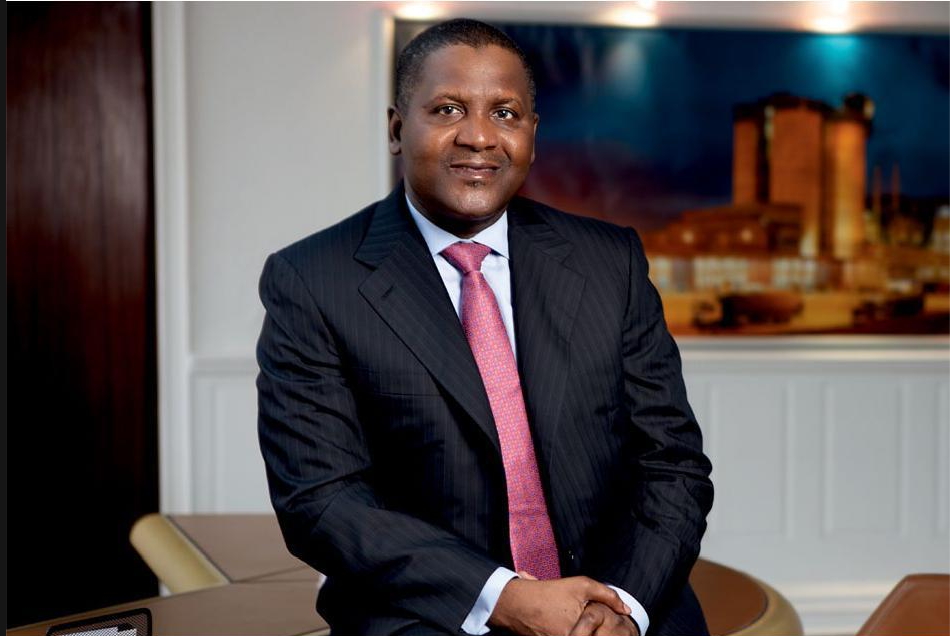
WARNING: Imitating Dangote’s Three-Hour-Night-Sleep Will Leave You Broke

 
Woman in Office Sleeping on Desk

You may have seen the report that Africa’s Richest Man, Aliko Dangote, is so caught up with work that he sleeps just three hours a day. “I believe in hard work and one of my business success secrets is hard work. It’s hard to see a youth that will go to bed by 2am and wake up by 5am. I don’t rest until I achieve something,” a story on Ventures Africa quotes the World’s richest black man as saying.

As admirable as Dangote’s passion and dedication to his fleet of businesses are, more than admirable when you throw in the fact that he built Africa’s largest conglomerate from scratch, your desire to follow in his footsteps should not make you adapt his sleep pattern. Doing so will put both your career and health at risk, so says several LinkedIn Influencers cited by the BBC.
Here is why you should take their warning seriously;
 
Sleep Deprivation Can Kill You
If your motto is “hustle till you drop”, lack of sleep could see you drop before you even profit from your hustle. LinkedIn influencer and Chief Executive at Advance Performance Institute, Bernard Marr, wrote in his LinkedIn post; “You may think that burning the midnight oil and staying constantly busy are good for your career — but you might be seriously damaging your career — and your health”. He explained that stress, among other things, increases the risk of heart disease by 40 percent, risk of heart attack by 25 percent and risk of stroke by 50 percent. “Many people thrive on stress and love the buzz that comes with it, but ignore the effect it has on their physical and mental wellbeing.”
 
And for those stretching their body limits because of money (or because they want to be like Dangote), Marr points to a research that showed that “the increased stress and fatigue of working overtime was not offset by any increase in happiness or wellbeing that might accompany the extra income”.
Like Dangote, you have to also find time to blow off steam.
 
And it can kill your career
You may be obstructing the very thing you are trying to achieve by depriving your body system of its required sleep. Travis Bradberry, another LinkedIn influencer and the President of Talent Smart, wrote in his post; “The short-term productivity gains from skipping sleep to work are quickly washed away by the detrimental effects of sleep deprivation on your mood, ability to focus and access to higher-level brain functions for days to come.” He added that the negative effects of sleep deprivation are so great that people who are drunk outperform those lacking sleep.
 
As to why we need sufficient sleep to perform better, Bradberry points to a new research from the University of Rochester (United States) which provided the first direct evidence for why our brain cells need us to sleep. “The study found that when you sleep, your brain removes toxic proteins from its neurons that are by-products of neural activity when you’re awake. Unfortunately, your brain can remove them adequately only while you’re asleep. So when you don’t get enough sleep, the toxic proteins remain in your brain cells, wreaking havoc by impairing your ability to think — something no amount of caffeine can fix,” Bradberry wrote.
 
“Skipping sleep impairs your brain function across the board. It slows your ability to process information and problem solve, kills your creativity, and catapults your stress levels and emotional reactivity,” he added. Thus, seven to nine hours of sleep is an obligation, Bradberry stresses, stating that the consequences of lack of such includes memory lapses, impaired moral judgment, impaired immune system and higher risk of heart disease and stroke.
 
Instead, get enough sleep, it will better your career and your Life
Good sleep and rest has immense benefits, sacrificing it may mean sacrificing your life and everything that you think you’re trying to achieve. This is not saying you should neglect Dangote’s 5 excellent entrepreneurial tips, rather it is an advice to also consider Bradberry’s 10 strategies for getting better sleep. Among them: “Avoid blue light at night; wake up at the same time every day; eliminate interruptions; and learn to meditate… (Those who meditate) report that it improves the quality of their sleep and that they can get the rest they need even if they aren’t able to significantly increase the number of hours they sleep.”
6sleep-amount
 
Bernard Marr also offers quality advice on how can you cool down and diffuse the pressure of work. “Often the difference between a fun and challenging situation and a stressful one is simply understanding what’s expected of you,” he wrote. “So, the number one way to reduce job-related stress is to have a clear idea of what’s expected of you and manage those expectations.”
 
If you are among those who constantly stress about work after you get home, Marr says you should take the time to make a firm plan of how to deal with problems before you leave the office. “That one step will help you leave work at work,” he declares. Automating as many tasks as possible can also help reduce stress, Marr adds, “This can also include simple daily decisions such as what to have for lunch or what to wear.”

First a Reader, Then a Leader

“If you only read the books that everyone else is reading, you can only think what everyone else is thinking.” – Haruki Murakami
 
"Each employee is required to read one recommended book per year.” Here is what Chinese business tycoon Wang Jianlin, who leads the Dalian Wanda Group, asks his entire staff to do (The ‘Read One Book Per Year’ requirement is part of the company’s official mission statement).
 
One of the things I really got to understand throughout 2014 is that fresh ideas, actionable insights, and imaginative solutions to a range of pressing challenges face current and future leaders of Africa.
I will like to leave you with some of the most inspirational books that business leaders from around the world have managed to read and recommend for your intellectual stimulation.

For this publication, I like to start out with a book that has really inspired my mind around creativity and innovation development, especially for emerging markets like Africa.

The Opposable Mind by Roger Martin. The book deals with integrative thinking that is much needed by professionals, future leaders and current leaders of today. It’s a new dimension that intrigued me when the CEO of LEGO, Jørgen Vig Knudstorp introduced the book as one of his reads in 2014.
 
CREATIVE LEADERSHIP BOOK OF THE YEAR

Creativity, Inc.: Overcoming the Unseen Forces that Stand in the Way of True Inspiration – Ed Catmull and Amy Wallace,
Catmull, co-founder and President of Pixar Animation Studios, one of the world’s most admired creative businesses, shares insights and profitable techniques for harnessing talent, using teams and structuring organizations  to produce unique and original creative work.

A More Beautiful Question by Warren Berger
Earlier this year I wrote an article that spoke to the content of this book indirectly. Remember don’t ask your kids what they learnt at school for the day. Instead ask them if they asked a good question. Most people believe great leaders, innovators, entrepreneurs, and activists are distinguished by their ability to give compelling answers. This assumption is shattered, proving that asking the right question make the real difference.

The Promise of a Pencil by Adam Braun
With an Ivy League degree and a coveted consulting job at Bain, and a gaping hole where passion ought to fit in, Adam Braun’s knew something was amiss. With age (24) and $25, he started Fast-forward five years, and Pencils of Promise, since then building more than 200 schools worldwide.

Business Adventures by John Brooks. “Warren Buffett recommended this book to me back in 1991, and it’s still the best business book I’ve ever read. Even though Brooks wrote more than four decades ago, he offers sharp insights into timeless fundamentals of business, like the challenge of building a large organization, hiring people with the right skills, and listening to customers’ feedback.”

Stress Test by Timothy F. Geithner. (Another that I have read) The central irony of Stress Test is that a guy who was accused of being a lousy communicator as U.S. Treasury Secretary has penned a great book that details the juxtapose between business lie and family in some parts.

The Rise: Creativity, The Gift of Failure, and the Search for Mastery
In this multi-layered and wide-ranging meditation, the writer takes on the increasingly over-simplified notion of failure as a central driver of creative work.  “The gift of failure is a riddle,’ concludes the art critic and curator, even suggesting in passing another term, ‘blankness,’ to emphasize the necessary dynamic, of those who persevere, of wiping clean provided by experience and then looking to what’s next.”

Essentialism by Greg McKeown
A must read for anyone considering managing themselves, not time, in different way. The book holds a set of instrumental keys to solving one of the great puzzles of life: how can we do less but accomplish more?

The Art of War, Sun Tzu
Simply because I have a personal interest in lots of Chess and military strategy, this is a brilliant read for anyone moving in the strategic direction. Written more than two thousand years ago in China, it’s a cunning depiction of military strategies and operations of brilliantly executed manoeuvres in Asian warfare.

The Sixth Extinction: An Unnatural History, by Elizabeth Kolbert.
It’s on everyone’s lips – Climate Change. It is a big problem. Humans are exerting massive amounts of pavement, displacing species around the planet, over-fishing and acidifying the oceans, changing the chemical composition of rivers, removing ancient tribes from the only form of living they know – without learning the intricacies of human and nature – not to mention the remedies that exist and used by these tribes…..a fascinating read.
 
Books to read in 2015

Work Rules!: Insights from Inside Google That Will Transform How You Live and Lead
By Laszlo Bock
“Heads of human resources typically aren’t known outside the companies where they work. Enter Laszlo Bock, The head of Google’s “People Operations,” Bock runs a department that’s been described as “more like a rigorous science lab than the pesky hall monitor most of us picture when we think of H.R.” The book clinically depicts what Bock learnt managing H.R. at one of the most generous — and also most data-driven — creative and innovative centres in the world.

A Curious Mind, By Brian Grazer and Charles Fishman
By Brian Grazer, the producer behind “Apollo 13,” “Arrested Development” and “A Beautiful Mind,” scheduled weekly “curiosity conversations” with outstanding achievers he doesn’t know: scientists, spies, CEOs and anyone else who sparks his interest and is willing to spend a few hours with him. Certainly for the inquisitive mind.

Their Own Sweet Time: How Successful Women Build Lives That Work , by Laura Vanderkam
How does she do it – at all? This book endeavours to answer that perpetual question, examining how highly paid professional women manage themselves hours Laura Vanderkam explores the “time-logs” from 1001 days by these women unpacking the vault of time management by successful women.

Resilience by Zolli and Healy
Recommend for anyone interested in Social Innovation dealing with the implications of system failure that remain inevitable.

Keeping up with the Quants, by Davenport and Kim
A definite read for the CIO and CTO. A firm grasp to data mining and quantitative analyses for non-mathematicians.

We do hope that 2015 will usher in a new reader and so, a new leader!

Does An Undying Business Drive Validate A School Drop-out?

education
As more university graduates in Africa go on to become entrepreneurs, while others enter a long, sometimes swerving, career paths miles away from their academic discipline, there is an rising mindset among the emerging labour force that resources – luxurious to many within the continent – could be better utilized to fund a brilliant idea than expend on a lengthy, presumingly not-so-rewarding  academic programme.

The education system – be it the learning environment, educators or infrastructure –  in Africa is evidently no where close to commendable, with the best university on the continent, University of Cape  Town, South Africa, only ranking 350 in the world. Worse still, business and entrepreneurial ideas are far from encouraged within these vicinities, the very places designated to nurture such traits and ideas at its early stages.
 
A long list of school dropouts who became renowned for their admirable entrepreneurial achievements might have the younger generation questioning the rationality in seeking a university degree over a compelling business idea, particularly with the poorly developed educational system in Africa. Across the continent, a pool of successful drop-outs is emerging, drawing up a stronger case for many to follow behind. One thing is however synonymous among most of these entrepreneurs; they have mostly emphasized the need for a strong educational backing. Here are some Africans whose ideas couldn’t just wait for a long academic upbringing:
 
Ashish J. Thakkar
The Ugandan-born serial entrepreneur is the founder of Mara Group and Mara Foundation, and an early school drop-out. “My name’s Ashish J. Thakkar. I’m the founder of the Mara Group and the Mara Foundation. I was a refugee. I’m a school drop-out, an entrepreneur, a philanthropist,” said Ashish at a panel during the just concluded U.S. – Africa summit in Washington D.C.”
Despite his success, the outspoken billionaire still harbours deep yearnings to pursue an academic-driven career. “I hope to be an astronaut next year,” he enthused.
 
Although Ashish’s decision to quit school was not motivated by a dreamy future, it was borne out of necessity. After surviving  the Rwandan genocide, Ashish’s family was forced to relocate, leaving everything, including a fledging business behind. The then 15-year-old boy was looked upon for his support, necessitating a drop-out. At the time, Ashish took a loan of $5,000 and set up  a little IT company in Uganda, rapidly building it to a pan-African business today.
His bold step 18 years ago now holds the foundation for what is now the Mara Group, a multi-business conglomerate with interests in 22 countries, with about 11,000 employees.
 
Cosmos Maduka 
After losing his father at age 4, life became difficult for Maduka. But determined not to live all his life in poverty, his foray into business started as he struggled from being a bean cake seller to becoming a sole distributor for BMW in Nigeria.
He dropped out not because he had a dream of becoming one of the biggest car dealers in Africa, but because he could not afford to pay his fees.
His apprenticeship in automobile repairs at his uncle’s workshop taught Cosmos all he needed to boost his interest in cars and his first major business venture went from 300, 000 to millions within a year. Today he is the Chairman/CEO of Coscharis Group of Companies.
 
Justin Stanford (South Africa)
Justin is only 29, but he is seen as one of South Africa’s leading entrepreneurs and investors. The tech genius had left school few years after he started his first business (aged 13; He sold apple juice to his classmates, while still in school). Justin had just one reason: classroom was too boring for him. He made his way to the top by starting his first company at 18 and now he ranks among Africa’s youngest millionaires.
 
Similar stories can be told of Said Salim Bakhresa of Egypt; Moroccan Anas Sefrioui, and South African Johann Rupert, all of whom left school in their early ages and had ventured into business.
At the end of the day, everyone of the billionaire ‘school dropouts’ had a very important decision to make at some point; choosing between their passion/guts and school. While some who left school because they had no other choice may be safe, but for others, a lot has to be put into consideration before making the life-altering decision to continue or stop schooling because of your business idea.

Bigger Is Not Always Better

SMEs
Small- to medium-sized enterprises, or SMEs, are invaluable to any economy. They can help catalyse job creation, reduce poverty, provide basic goods and services, and generate the export and tax revenues that help societies develop. They can even help to provide infrastructure and facilities like water, roads and electricity, and to diversify the country’s economy, making societies more stable.


Ghana’s economy has reaped many of these social and economic benefits from its high percentage of SMEs. Making up 92 percent of the country’s firms, they employ about 85 percent of the country’s manufacturing workers. Until 2011, the manufacturing sector, which is dominated by SMEs, had been contributing about 70 percent to Ghana’s GDP. (This figure then dropped to 49 percent, mainly thanks to the commercial natural gas and oil production that began in the first quarter of 2011.) With the exception of a few privatised state- owned enterprises or natural-resource monopolies, most of the large, successful firms in Ghana evolved from SMEs.
 
Realising the value of SMEs, Ghana’s government has taken steps to promote them. In 2004, the Venture Capital Trust Fund Act created a federally administered fund for such firms in Ghana. To date, it has dispensed $17 million, financing 48 SMEs through five intermediary funds, while also providing technical assistance to local entrepreneurs and investors.
 
The act defines an SME as an industry, project undertaking or economic activity whose total asset base, excluding land and building, does not exceed the Ghanaian cedi equivalent of $1 million in value. Other definitions of SME focus on revenue: Ghana’s National Board for Small Scale Industries considers enterprises with annual turnover greater than $200,000 but not more than $5 million to be SMEs. While some of Ghana’s SMEs succeed, many do not. One of the main reasons for failure is a lack of training.
 
Many of the people running SMEs could improve both their entrepreneurial skills and their ability to manage finances. But there are also circumstantial problems. Ghanaian small-businesspeople have limited or no access to high-quality and affordable business-development services, technical services, and management-support services. They face an erratic power supply, technology gaps, and problems with access to both markets and information about them.
 
Challenges, Regulation and Reformation 
The problems for SMEs start with a lack of access to capital. Banks and financial institutions tend to assess them as inherently risky because of their insufficient assets and low level of capitalisation, their relative vulnerability to market fluctuations and their high mortality rates. SMEs thus suffer frequent credit rationing be- cause of a lack of reliable collateral of the type required by banks.
 
When SMEs are granted credit, they access it at comparatively high interest rates, sometimes coupled with delayed disbursements. A lack of available credit has crippled many SMEs in Ghana despite efforts by government and private institutions to offer financial support to businesses. With microfinance institutions and savings-and-loans companies proliferating in Ghana, it seems possible that the barriers of inadequate capital and limited financial support will fall. But so far the inverse seems to be true. Given how much SMEs contribute to Ghana’s economy, one would expect government regulation to support their development.
 
Unfortunately, at times, government has done just the opposite. For example, after the 2007 discovery of oil in the western region of Ghana, many local oil and gas businesses tried to enter the market. Yet the legal regulation until November 2013 made the business environment more favourable for international companies, which already had an advantage of capital and know-how in the oil and gas sector. The SMEs received inadequate information on contracts, and the bidding process for access seemed to favour foreign companies. The tilted playing field made it difficult for local SMEs to even compete. After strong complaints from many
 
SMEs, Ghana’s parliament passed the Petroleum (Local Content and Local Participation) Regulation on 20 November 2013, in an attempt to ensure that Ghanaians benefit from the country’s new resource. Among its other goals, the law seeks to create jobs for Ghanaians by setting minimum local employment levels and minimum in-country expenditures for firms accessing its petroleum re- sources. Education, skills transfer, transfer of technology, and active research and development programmes will help develop local capacities.
 
The incident showed how important it is for Ghana’s government to take the country’s home-grown business sector into account. Yet despite the training and advisory services that the country’s universities and government make available, many small business owners and managers still have limited managerial knowledge and skills in their fields of work, as well as low financial literacy, inadequate operational skills, and insufficient business planning experience.
 
Poor training restricts the ability of managers to make sound decisions, and makes it more difficult for them to compete. While globalisation and trade liberalisation have brought possibilities as well as challenges to Ghana’s SMEs, few firms have identified and exploited the opportunities. The majority of Ghana’s SMEs have fallen further behind due to a lack of literacy in new technologies.
 
To make matters worse, local SMEs often find themselves competing with foreign firms and cheap imports in local markets. The high costs of formalisation, including licensing and registration requirements, pose another obstacle for SMEs. While efforts have been made to streamline business registration processes in Ghana, they have only partly succeeded. Many businesses have chosen to stay in the informal sector rather than struggle to enter the formal sector – which means they do not contribute to national growth. Issues processing export documents and clearing goods from ports are also a concern for many businesses, due to the cost and time involved. Despite all of this, the sector’s future in Ghana looks bright.
 
In a move towards bridging the persistent gap between financing for SMEs and other businesses, Ghana’s government, together with development partners including the International Finance Corporation and the government of Italy, has launched several financial schemes to accelerate the flow of financing to SMEs. The latest of these is the Ghana SME Fund, launched by the Ministry of Finance with the country’s 2014 budget. The fund is expected to make more than $20 million available to SMEs. Financing skill-deficient businesses and entrepreneurs who do not know how to make the best of funding is, however, an exercise in futility.
 
It is prudent to en- sure that SMEs have skilled labourers in their ranks and knowledgeable managers at their helm. Several new institutions and initiatives have been established recently in Ghana to serve these education- al and training goals. Among these initiatives are the Enterprise Development Centre (EDC) and the Private Enterprise Foundation. The EDC, launched in May 2013 with a start-up fund of $5 million, is a five- year project jointly sponsored by the Jubilee Partners – Tullow Oil, Ghana, Cosmos Ghana, Anadarko, Petro SA and the Ghana National Petroleum Corporation (GNPC).
 
The fund, which is jointly super- vised by the Ministry of Energy and Petroleum and the Ministry of Trade and Industry, aims to support to Ghanaian SMEs trying to enter the oil and gas sector. The EDC provides a range of services such as business training, capacity-building programmes, advisory services, and access to markets and information. The Private Enterprise Foundation was established as an autonomous, non-profit institution, comprised of Ghanaian business interest groups like the Ghanaian National Chamber of Commerce. The goal is to create a fertile environment for private sector businesses by lobbying for favourable policies and legislation.
 
Technology, banking and Finance
Today’s businesses must continuously incorporate new technologies into their production processes, marketing strategies and management functions in order to stay competitive.
Many SMEs in Ghana have been unable to take advantage of such advancements, however, often because they lack access to and knowledge of the Internet, technology-literate managers and workers and sufficient financial resources.
 
The Ghana Regional Appropriate Technology Industrial Service (GRA- TIS) Project was established in response to these basic staffing and information needs. GRATIS has set up Intermediate Technology Transfer Units (now called Regional Technology Transfer Centres) in nine regions of Ghana to train small manufacturers and supply them with tools and equipment. The evolution of SME banking in Ghana is expected to boost SME performance in the near future as businesses take advantage of the growing sector to find funding and credit support.
 
Financial institutions that previously focused only on corporate clients and large organisations now have SME departments dedicated to small enterprise financing, and several banks have started developing innovative products specifically aimed at SMEs. Among these products are term loans for acquisition of capital goods (fixed assets like equipment and land); and working capital, by way of cash credit or overdrafts.
 
Looking to solve the collateral issue many Ghanaian businesses face, microfinance companies and banks are moving towards accepting more flexible forms of collateral, particularly for SMEs with few fixed assets. They are also embracing the use of group guarantees for SMEs and placing more emphasis on cash flow than on balance sheets when assessing borrowing capacity. They also have simplified loan application assessment procedures. With these developments and other campaigns geared towards developing SMEs in years to come, the SME sector in Ghana is expected to grow significantly in the future.
 
Moving Towards the Future
The persistent fall of the cedi against major international currencies like the US dollar, the pound and the euro, together with the current high import rate of goods and services into the country, stand as major threats to SME development. But, as the country tries to reduce its imports and increase local production and consumption, it is expected that the government’s commitment to SMEs, which hold great prospects for manufacturing and agriculture, will increase.
To fully exploit the latent opportunities in the SME segment of Ghana’s economy, the government should focus on building up suitable infrastructure, education and training facilities, capable public and private institutions, simplified legal and regulatory frameworks, and good governance.

Five Quotes From Dangote On Why He Is Immensely Successful

dangote-graphics 

To become a successful entrepreneur is not a day’s job. Successful business men all have a driving force and this motivation is what keeps them going in the face seemingly insurmountable challenges.
 
Many of we young entrepreneurs might not have met Africa’s richest man Alhaji Aliko Dangote, but if you can connect with some of his quotes you can grasp the scope of how he thinks, his motivation. These five quotes are words by the man himself and I hope you will find inspiration from them. To all Africa’s young entrepreneurs, regardless of the type of enterprise you are trying to build, applying these words gleaned from experience to your daily activities and your business would be immensely beneficial.
Dangote in a yatch Photo Credit: LIB
“I enjoy myself a lot but I derive more joy in working. I believe in hard work and one of my business success secrets is hard work. It’s hard to see a youth that will go to bed by 2am and wake up by 5am. I don’t rest until I achieve something.” 
 
Africa’s richest man sleeps 3hours a day!!! Are you oversleeping? Do you love your business?
 
“I built a conglomerate and emerged the richest black man in the world in 2008 but it didn’t happen overnight. It took me thirty years to get to where I am today. Youths of today aspire to be like me but they want to achieve it overnight. It’s not going to work. To build a successful business, you must start small and dream big. In the journey of entrepreneurship, tenacity of purpose is supreme.” 
 
The tenacity of purpose is supreme. The harder you work the luckier you get.

“After my death, I want to be remembered as Africa’s greatest industrialist.”
Dangote-OnoBello-1107
 
Here is a question to every entrepreneur: “What do you want to be remembered for?” Is your enterprise driven by a vision of stomach infrastructure and sustainability or a larger-than-life purpose?
 
“If you don’t have ambition, you shouldn’t be alive”.
 
Strong words akin to Jack Ma’s quote: “If you’re still poor at 35, you deserve it!”
 
“Every morning when I wake up, I make up my mind to solve as many problems, before retiring home.”
 
First, Dangote boosted local cement production, plummeted cement importation and reduced cement congestion at Nigerian ports. Now, he just slashed cement cost by 50 percent! Are you seeking to just enrich yourself without thinking of how to solve the market’s problems? If your answer is in the affirmative, you need to learn from Africa’s biggest industrialist. He knows better!

Six Life-saving Wisdom Required For A Successful Business Start

 startup
Entrepreneurship by its very nature is tough. Taking a path less trodden and building sustainable businesses that previously were non-existent exposes the inexperienced entrepreneur to an unknown fate, loneliness and doubt. Many entrepreneurs who took bold leaps into uncharted courses for their lives have ended stuck in debt, regretting their actions and wondering if they did the right thing in the first place not taking the employment offer relatives secured for them or resigning their fat paying jobs. Truth is many of them have been victims of ignorance as reports have shown that serial entrepreneurs got better and survived with every successive business they built.
For any employee truly thinking of being a successful full-time entrepreneur, here are five must-keep laws to escalate your chances of survival and success.
 
Get a Financial Cushion
The relevance of having a savings culture cannot be over emphasized though due to the expensive cost of living in major cities across Africa, you find that most employees have barely enough to pay bills not to talk of saving enough funds to venture into a business with. However, it is very important for an aspiring entrepreneur to having enough saving that can fund his/her cost of living for as long as it would take for the intended startup to become sustainable. In a harsh yet lucrative business climate like Africa’s, a one year span would be fine. If you cannot determine how to and eventually capture value or start making profit from your business within twelve months then something is fundamentally wrong with your understanding of the business or you have poor startup know-how.
There is no overnight success in entrepreneurship so save ahead to have a financial cushion when your small business isn’t bringing in any money; except of course you have no job in the first place and have nothing to lose. Otherwise, your girlfriend might just be leaving you for the C-suite exec who was your junior in secondary school.
 
Don’t Burn Your Bridges Just Yet
At times business ideas are only ideal and not practicable in the market. That’s why businesses do testing and beta phases. It is dangerous and unadvisable to take blind leaps or resign without first proving your business idea in the market. This is a primary reason many entrepreneurs end up burnt, exhausted and frustrated. Don’t resign your job just yet. Don’t take that major life decision just yet. Keep your job while you test-run your business. Let is keep growing, amassing customers, market share, brand value, connections and government recognition. The time will come when it’s all grown, buzzing with promise and profit and would require undivided attention. iROKO tv boss Jason Njoku suffered and battled poverty and depression for years because he did not keep a job while nine startups he founded failed. Fortunately, the tenth one has succeeded. Tara Durotoye also did not quit Law school just because her make up business was waxing.
 
Now, Burn Your Boats
One of my favorite stories on Napoleon Bonaparte is his famed Russian invasion in which he crossed an ocean and on arriving ashore he saw that his army was largely outnumbered by the enemy and his soldiers were beginning to show signs of fear. He gave an order to his generals to “burn the boats”. “No retreat, no surrender. We either fight to win or die”.
Same rule can be applied on entrepreneurship. One cannot be preparing on go into entrepreneurship and still retain part-time jobs and expect ones startup to function at optimum levels or grow to its full potential. You need to burn the bridge. Cut all job ties.
 
Everyone Won’t Support You
On my flight back to Lagos from Abuja recently, I sat next to the founder of a major transnational transportation company. He told me of how he started his transportation business. He said he first consulted a respected cousin of his to seek his opinion on venturing into the transportation business. He spoke of how his cousin discouraged him and told him that it’s too risky a business, and that competitors are usually bitter and could even go fetish and all that. And some people even told him that he has only recently returned to the country and may not know how businesses are run in this clime. He however persevered and believed in his dream. Today his transport coy can be easily be described as one of the fastest growing brands in the road transport business.
The truth is, love makes sincere relatives and friends worry and dissuade entrepreneurs from their pursuit. Haters too would take the opportunity to spite.
 
Find a Company of Kindred Spirit
When the going gets tough, nothing can be more exhilarating and thrilling for entrepreneurs as meeting fellow entrepreneurs, especially intelligent and highly successful ones. The time shared with these fellow risk-takers can quench depression caused by the toll of a lonely business pursuit, and re-enforce ones believe in the original purpose of building a company. During the younger days of House of Tara, Founder Tara Durotoye was frustrated due to lack of capital but a fateful encounter with a respected Nigerian entrepreneur Chair Centre CEO Ibukun Awosika revived her spirit and even helped her secure a N500,000 loan from GT Bank.
 
Spend Quality Time Drafting Your Business Plan
A business plan is an entrepreneur’s road map. It shows you where you’re coming from, where you are, and where you’re headed. It is the most important pillar of an entrepreneur. More important than even funding. In fact, it is so important that the entire eighteen months earlier stated as the period or duration of saving, should also be used to build a business plan. No duration used in building and redefining a business plan can be too much because once you get it right in the planning stage, it solves a lot of problems and saves time at the implementation stage.
Starting an enterprise is like giving birth to a child. And just as a child needs all the attention she can get from her mother, so does an enterprise needs all the attention and nurture from its entrepreneur. A real entrepreneur is at it full-time–and much more than 45 hours per week.

Where to Plant, Where to Grow

SME 
“If you want to go fast, go alone; If you want to go far, go together” – African Proverb
Africa is at a precipice when it comes to sustaining economic growth in the SME sector, especially in Sub-Saharan Africa. But given the global change in geo-politico-economic shifts, what lies ahead for the entrepreneur who needs to plant, and those who need to grow?
 
SME’s do generally need to identify the opportunities that are really available in Africa. The challenge plays out in realising which segment of the SME market is well capitalised to take advantage of these opportunities. The challenge when speaking about SME’s compared to the rest of the world is that many Sub-Saharan countries have a large number of SMEs relative to the size of the economy. However, these SME’s are almost exclusively micro companies and they are often not part of the formal economy.
 
“According to an in-depth study conducted by the Economist Intelligence Unit (EIU) on behalf of DHL Express, approximately 40% of global SMEs (small and medium-sized enterprises) do not perceive Africa as a growth opportunity, despite the positive economic growth stories and growing middle class in the regions.”
 
Ultimately, Africa remains the place to plant your seed. How and where to grow, under the stalemate of constricted economic growth, will be a matter of how SME’s use their pawns.
 
There exists two fundamental characteristics that affect SME’s, specifically in the Sub-Saharan regions, these being; Lack of finance and unstable electricity supply that serve as severe obstacles to SME growth. Over the last decade many countries in Sub-Saharan Africa have experienced high growth. These cyclical phases have been the result many SME’s growing into prosperity and others dwindling into the abyss of SME failures.
 
Growth as the rest of the world knows it still differs widely among countries in the African regions. Angola, Ethiopia and Mozambique display strong growth, on the flip side, economies of Burundi, Malawi and not to mention Zimbabwe struggle severely. Some countries in Africa even enjoyed peaks of growth at 17 percent with the worst trough being 8 percent.
 
“The fact that SMEs expect to generate up to 50 percent of revenues internationally by 2019 is a massive positive and highlights the vast opportunities for Africa from an investment and job creation perspective”, says Charles Brewer, Managing Director of DHL Express Sub Saharan Africa.
 
The growth in sub-Saharan Africa is made up of private investment that has gained momentum since the early nineties and fuelled long term economic growth. In this same equation, growth in public spending and private consumption remains critical components to Africa’s development and growing middle-class.
 
We continue to find that differences in growth rates between countries in various regions are driven by governance and access natural resources. A closer look at the variance exposes that the agricultural sector is substantially larger in countries in Sub-Saharan Africa than in other regions of the world.
 
Identifying some of the opportunities rests in Africa exporting 70 percent of their raw materials and resources. Where the downstream sectors should be developing to convert and create downstream jobs and economies, these processes along with the revenues and job creation opportunities follow.
 
Hindering Growth
So we know with certainty that Africa presents a viable case for investment and SME planting. But what else is hindering the growth needed in this sector?
Cross-border trade in Africa is limited when it comes to growth. Lack of infrastructure that imposes the cost onto the consumer forces SME’s into unattractive international markets. Even in this case, to compete, the SME needs to have the capacity to compete and remain relevant. It goes without saying that border-locked countries in Africa suffer the most.
Lack of infrastructure then impacts on reliable delivery channels, not forgetting that the cost of not refining oil and producing petroleum on the continent has severe consequences for business, especially SME’s on the continent.
As insane as it may sound, some industries and SMEs may benefit from a certain degree of political turmoil, if their products have relevance in messy situations.
 
Looking for Growth
Despite Africa’s strong growth rates to peak at an average of 5 percent in sub-Saharan Africa in 2015 on the back of investment growth and household spending most SME’s see very few opportunities in Africa. Can this be due to the ease of doing business in Africa which can be cumbersome? Can it be that the average size of an SME in international surveys represents revenues that far exceed those of African SME’s?
 
According to a recent study by the Economist Investigating Unit (EIU) for DHL, “Roughly 40% of both G7 and BRICM SMEs that are planning to trade internationally in the future said the continent offers no growth potential, indicating that the negative impression is set well before SMEs even establish offshore operations.”
 
“US SMEs entering Africa are spending a lot of money dealing with inadequate infrastructure”, says Danielle Walker, director of African affairs at the US Chamber of Commerce. “There are high costs associated with deliveries waiting in stifling traffic and sitting at border crossings because of inefficient customs procedures. SMEs investing in Africa, the final frontier are purchasing back-up generators because of inconsistent power supply. Their employees likely have several mobile phones from different providers, because of unreliable network coverage. If an SME is unable to hire locally because the skill set is not readily available in market, it can be very expensive in terms of taxes to bring in an American to do the work, as South Africa is the only country in sub-Saharan Africa that has a double taxation treaty with the US.”
 
Africa’s problem is intrinsically linked to technological development. The continent despite being progressive, still simply lacks the necessary infrastructure to support hi-tech electronics. “Our products need high-speed Internet connections so it’s too early to start an African business, which needs reliable Internet connectivity,” said Mr Iwasa.
 
Mr Becerra of BuffaloGrid—which launched its first offering in Uganda and is deeply familiar with the dynamics on the continent—concurs with that assessment, adding that petty corruption is also an issue. “The concerns are certainly valid,” Mr Becerra says.
 
Evidence through the latest studies is forecasting that more attention needs to be focused on identifying the hotspots to inject liquidity and support to Africa’s SME sectors. Easing the red-tape for doing business and increasing access to finance for expansion, while being creative by expanding our downstream sectors, are critical opening up opportunities for growth and planting.